


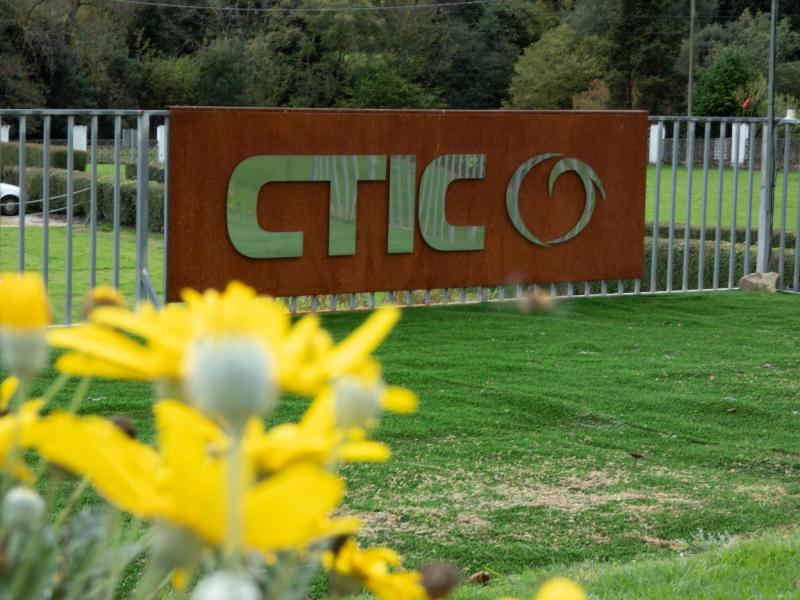
In a global scenario defined by industrial competitiveness and the urgency of the energy transition, technology centers have become the indispensable connective tissue between advanced research and the market. In this ecosystem, CTIC Centro Tecnológico has established itself as a national benchmark that hybridizes high specialization with a deep territorial vocation.
Founded in late 2003 by a group of Asturian companies in collaboration with the regional government, the institution has accompanied the digital evolution from the expansion of the Internet to the current hegemony of artificial intelligence. "At the beginning we worked with artificial vision or expert systems, but the revolution came at the end of 2022 with generative AI; this already has an extended scope at a social level," explains Pablo Coca, its CEO. Today, with more than 1,500 companies placing their trust in CTIC, its mission remains clear: to transform digital technologies into tools for a better society and a more competitive economy.
What sets CTIC apart in the saturated innovation market is its comprehensive mastery of the data value chain, addressing technologies such as artificial intelligence, interoperable data spaces, quantum computing, human factor, immersive technologies and blockchain, as well as its ability to generate trust and offer real experimentation environments. The Center for Technological and Industrial Development (CDTI) has endorsed this excellence with nine accreditations as a Cervera Center of Excellence, the highest number in Spain, in areas ranging from quantum computing to artificial intelligence, intelligent transport, industry 5.0 or digital health.
At its headquarters in Gijón and Villaviciosa (CTIC RuralTech), companies not only theorize, but also validate their projects in unique infrastructures. For example, its 38 logical qubit emulator is the largest computing capacity of its kind in Spain and allows organizations to test quantum algorithms and use cases before making the leap to real hardware, thus minimizing risks and accelerating technological adoption.
Outstanding projects
This technical capacity translates into tangible solutions that protect the value of strategic sectors. One example is QuesIA, developed together with Industrias Lácteas Monteverde, where artificial intelligence acts as a safeguard for the know-how of master cheesemakers. "With QuesIA what we are doing is using AI to ensure the continuity of a business, knowledge sharing in the company and protect product quality," says Pablo Coca.
This same efficiency logic applies to advanced manufacturing; where there used to be rigid machines, there are now conscious systems. In collaboration with firms such as TEKOX or Normagrup, the center has implemented AI models that anticipate demand, while in robotics they have achieved a qualitative leap. "Many robots are very precise, but they are not at all intelligent. With artificial vision we have given them 'eyes' so that, if a part changes, they recognize the change and adjust their movement autonomously," says CTIC's CEO.
The next decade will be conditioned both by the convergence between artificial intelligence and quantum computing, and by Industry 5.0, a paradigm that puts people back in the limelight. Therefore, for CTIC, the future does not lie in artificial intelligence replacing the worker, but in empowering his or her unique faculties. While the 4.0 era focused on connectivity and massive data collection, the current challenge is different: "in the 5.0 era the question is: once we have all that, where is the person contributing value? For CTIC, the answer lies in complementarity, especially in critical decisions where human judgment is irreplaceable. "We can have systems that save a lot of time, but ultimately the person who decides whether a risk is real is the person who knows about that business," says Pablo Coca.
Under this vision, the center is betting on artificial intelligence that augments human capabilities without pretending to emulate their consciousness. "At the moment machines are not conscious, and that's where we people really have the value contribution," concludes Pablo Coca. With an active participation in cutting-edge programs and being the main returner in Asturias of Horizon Europe funds in collaborative projects (Pillar 2), CTIC faces the future with the commitment that innovation is not only advanced, but that it is useful, safe and, above all, that it guarantees the continuity and success of the business fabric in a world in constant change and from a perspective of technology developed in Spain to contribute to increase the strategic autonomy of our country.