


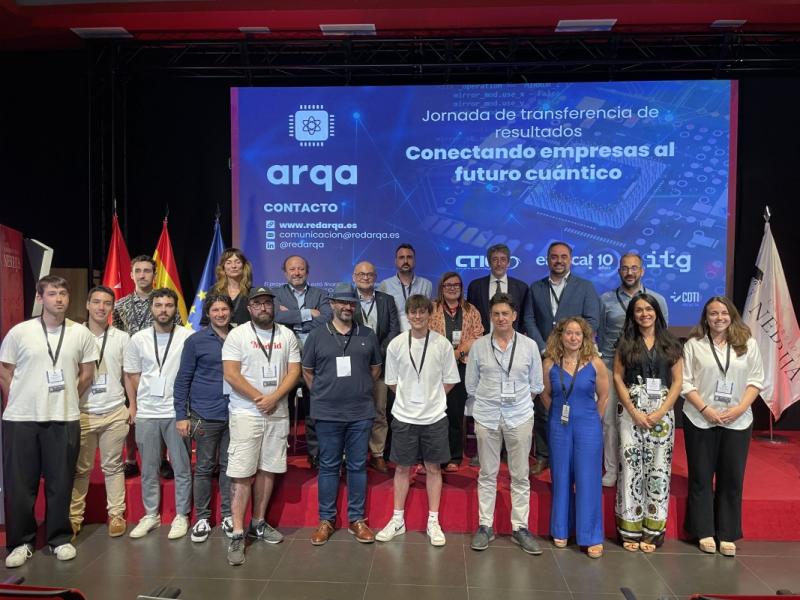
It is made up of the technology centers CTIC -network coordinator-, Eurecat and ITG.
The Cervera ARQA Excellence Network, coordinated by CTIC Technological Center and formed together with the centers Eurecat and ITG, presented on June 18, 2005, in Madrid the progress achieved during two years of joint work in the field of quantum computing to solve practical high-complexity problems faced by the Spanish and international business fabric related to their productive model.
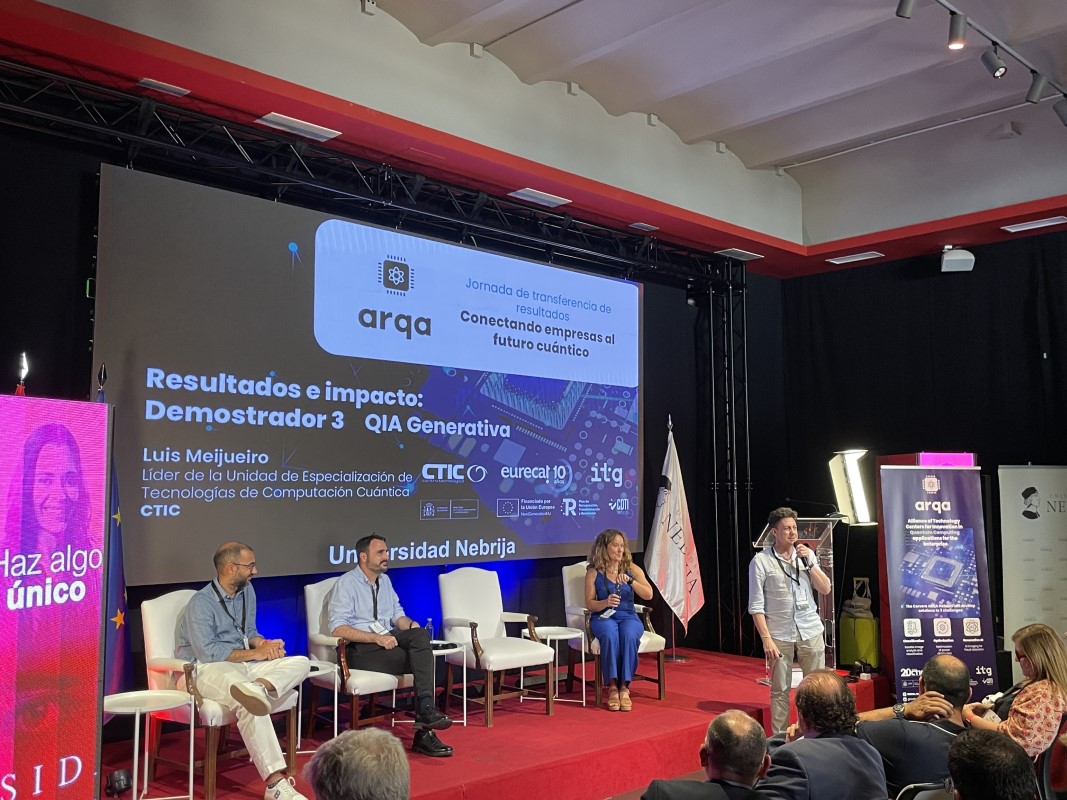
Within the framework of the event “Connecting Companies to the Quantum Future” held at the Princesa Campus of Nebrija University, they showcased the feasibility of this technology through three technological demonstrators applying it to complex tasks such as satellite image analysis, energy optimization, and fraud detection using signatures generated by artificial intelligence.
The results demonstrate the transformative potential of quantum computing and its future impact on strategic sectors such as energy, data analysis, and cybersecurity. “Our goal is to bring innovation and quantum technologies closer to companies because they will have great medium- and long-term impacts in many sectors,” highlighted Pablo Coca, general director of CTIC. “Thanks to initiatives like this and funding from CDTI through the Cervera program, we can advance in emerging technologies while bringing them closer to the business reality.”

The event was attended by the Secretary General for Innovation of the Ministry of Science, Innovation and Universities, Teresa Riesgo, as well as representatives of the technological centers who presented the results and Javier Hernanz Zajara, representative of the quantum working group of AMETIC, who delved into the state of the art in quantum computing. Also, during the event, Susana de Prado, Head of the Office for Digital Spain 2030 and Internationalization, presented the ‘Spanish Strategy for Quantum Technologies’.

Quantum Computing Applied to Real Problems
During the event, three technological developments with practical applications were presented:
• Fraud Detection in AI-Generated Signatures: this demonstrator explored the use of quantum generative adversarial networks (QGANs) to identify fake handwritten signatures created by artificial intelligence, affecting banking, legal, and administrative environments. "We have verified that quantum models are capable of generating and detecting synthetic signatures effectively, which opens the door to new cybersecurity tools,” explained Luis Meijueiro, head of the quantum computing team at CTIC.
• Satellite Image Classification: using quantum algorithms, a tool was developed capable of identifying and classifying geographical elements (rivers, roads, forests, or cities) in Sentinel-2 satellite images, allowing for land use understanding, crop monitoring, infrastructure analysis, and urban development planning, as well as studying the impact of climate change. This approach compares the performance of classical, simulated quantum, and real quantum algorithms, demonstrating the usefulness of this technology in territorial management.
• Energy Distribution Optimization in Energy Communities: the demonstrator applied quantum computing to improve energy management and the efficiency of renewable energy use in energy communities, taking into account factors such as solar forecasting and market prices. The algorithms optimized key decisions such as battery charging and discharging or the use of appliances at more profitable times.

Spain at the Forefront of the New Quantum Economy
Estimates hold that the global quantum technologies market will reach 152 billion euros by 2040. In this context, strategic alliances like ARQA are essential to ensure that knowledge generated in Spain translates into applicable, competitive, and sustainable solutions aimed at the business fabric, from process improvement to new service development.
The ARQA Network is part of the 2023 Cervera Technological Excellence Centers program, promoted by the Ministry of Science, Innovation and Universities through the Center for Technological Development and Innovation (CDTI) and funded with European NextGenerationEU funds. Its goal is to strengthen the leadership of Spanish technological centers in emerging areas such as quantum computing.