



The collective self-consumption photovoltaic facility set up by CTIC in 2023 as part of the "Aldea 0" project, pioneer in its conception and location in rural areas, and which sought to demonstrate the potential of this type of facility in rural contexts, is becoming a space for experimentation with repercussions beyond the local sphere.
This infrastructure, located at CTIC RuralTech, in Valle de Peón (Villaviciosa), is a living laboratory that allows testing, in a real territory, advanced solutions to improve energy autonomy, data management and resilience of the rural environment.
Composed of 100 solar panels totaling 45 kWp, its design combines 68 panels connected directly to the grid through a 20 kW inverter and 32 other panels dedicated to powering a battery system with 50.16 kWh of storage. It is this hybrid configuration that allows it to supply clean energy 24 hours a day, responding to the needs of a rural environment where flexibility and energy self-sufficiency are key.
This deployment has allowed the consolidation of a collective self-consumption model involving the Peón rural school, CTIC RuralTech's own headquarters and five houses located nearby, with an energy distribution based on highly detailed distribution coefficients that guarantee transparency and an equitable and optimized use of locally generated energy. It is a real example of how rural communities can organize themselves to reduce costs, gain autonomy and move towards a more sustainable and resilient model.
European energy transition
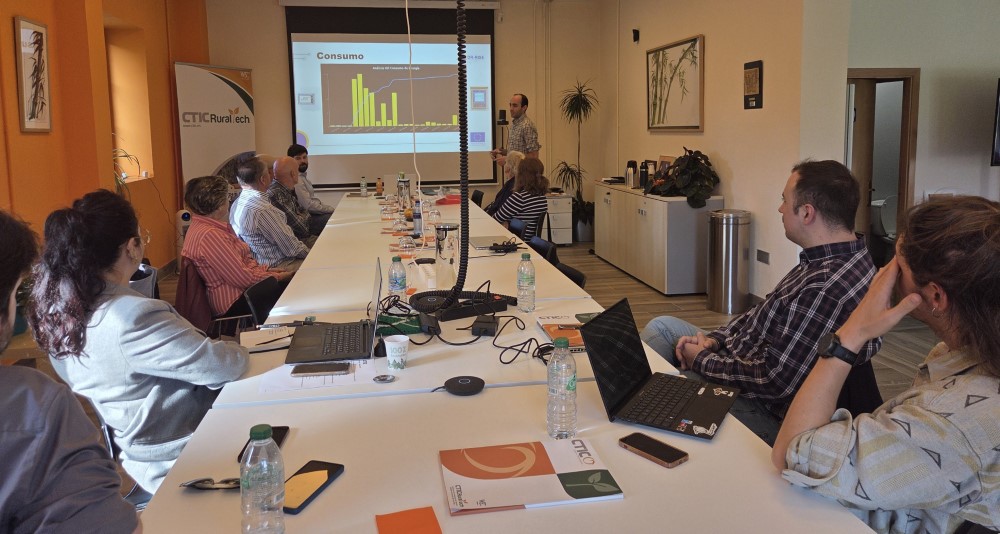
The technical and organizational uniqueness of the Peón energy community has allowed its integration in five European projects focused on accelerating the energy transition. In DR-RISE, the impact of the active participation of users in demand management is being studied; in GLocalFlex, flexibility markets are being tested that will allow communities like Peón's to participate in advanced services of the electricity system; in Tenclave, technologies for secure and decentralized data processing are being worked on using tools such as FHE, ZKP or blockchain; in Data Cellar contributes to the creation of an interoperable European energy data space; and Moderate explores mechanisms for the secure exchange of data between different players in the sector using AI, machine learning, IoT or DLT technologies.
Self-management of resources
The Peon Valley has thus become a strategic node on the European energy innovation map. It does not limit itself to producing renewable energy, but experiments with advanced digital technologies that allow it to optimize its management, and generates knowledge that can be exported to other communities and rural territories in Europe. Its value lies in demonstrating that the energy transition does not depend solely on infrastructure or technology, but also on a community's ability to organize, share and manage its own resources.
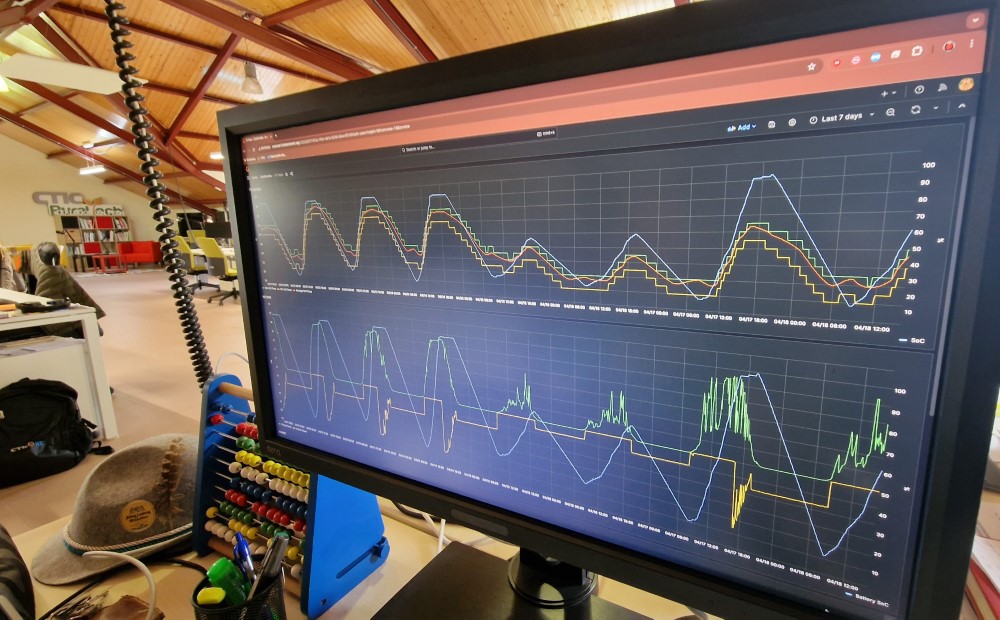
The Peón energy community is a unique demonstrator in Spain due to its composition and location in a rural environment where the energy future is tested, learned and promoted to build territory. A space that shows that the energy transition can also be built from the villages, providing innovative solutions that transcend the local and contribute to the collective European progress towards a more sustainable, intelligent and resilient model.